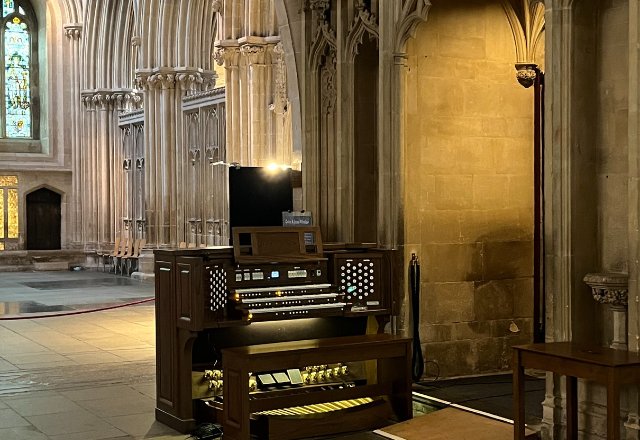
The prospect of voicing a large instrument in one of the most fantastic buildings in the country was a particularly appealing one to start the year. Wells Cathedral has an absolutely cavernous acoustic, yet is extremely favourable to music. The town itself is charismatic and everyone we met was very kind to us, from the dedicated staff at the Cathedral to the members of the public who stopped by and asked after our work.
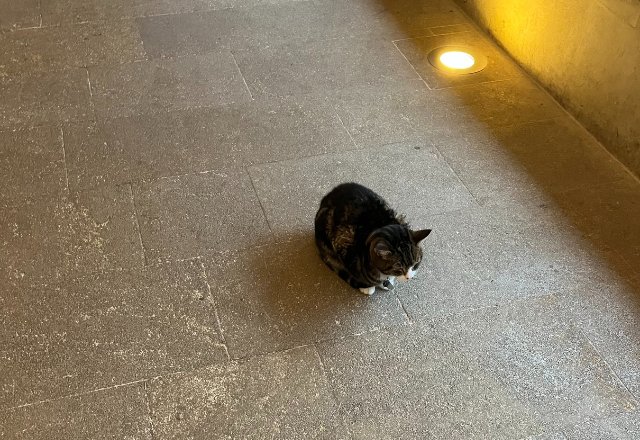
We had the most unexpected welcome – before we could even get to the official welcome desk, the (unofficial) cathedral cat, Basil, stopped us for extra attention! He was our first point of contact with the cathedral on both days, so clearly took his job very seriously.
Working with the Wells Cathedral music team
Keen to get the most accurate instructions we could, we sought out the Cathedral music team, Timothy, Carolyn, and Edward. All of them were delightful to work with, and of course knew both the organ and musical requirements of the building far better than we could ever hope to in the space of two days! With plenty of clear instruction given, we could make a start.
It was a delight to continue on from the hard work of our colleagues (read more about the installation of the Viscount Organ at Wells Cathedral), who in the end made life very easy for us as voicers.
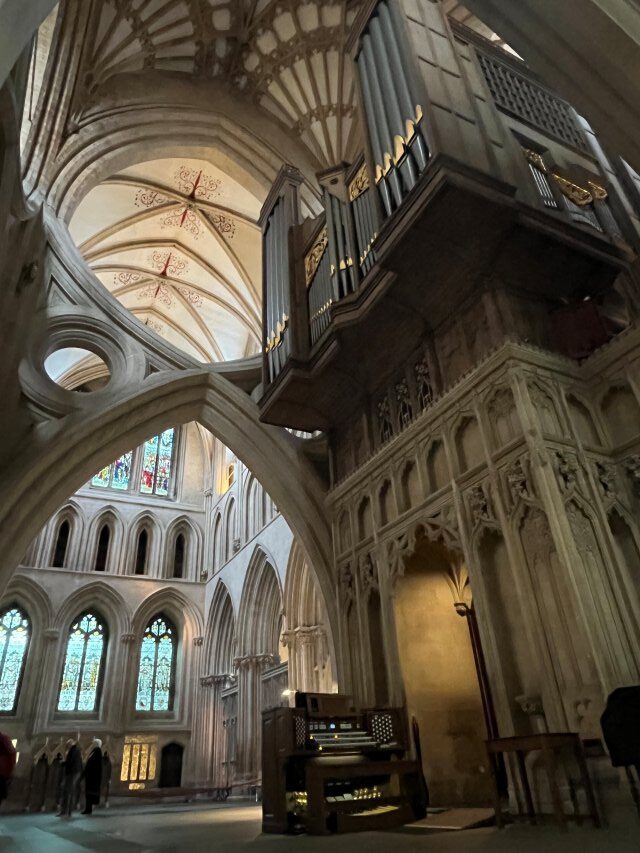
With the additional challenge of a duplicated speaker set-up – 12 in the Quire, 12 high up in the Nave matching them – we chose to focus our efforts entirely on the Quire, as it was there that Choral Evensong and the lunchtime organ recitals would be heard. Consequently the organ needed to be in the most perfect possible voice there!

Speaker locations gives us a challenge
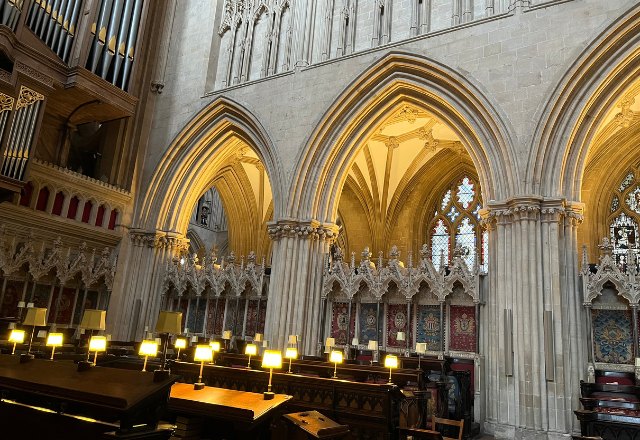
The speaker layout in the Quire was in a line above the north side of the choir stalls. This presented some challenges from a musical point of view as, for us, it was important that we constructed a musically believable soundscape. However, with the limitation of not being able to put speakers in the old casework, as it undergoes its exciting renovation, we instead made use of Physis’ ability to “place” pipes in patterns, as they would be on real soundboards, for extra distinction.
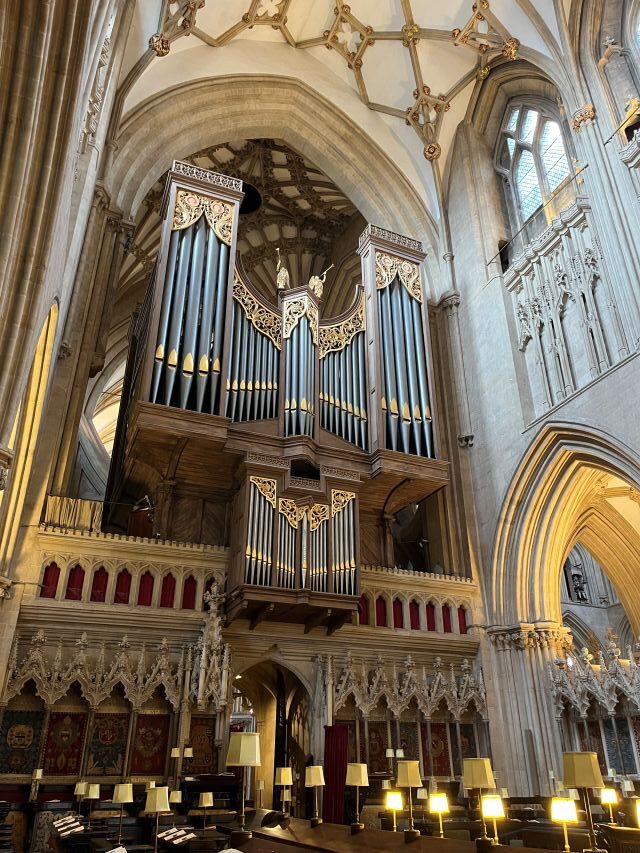
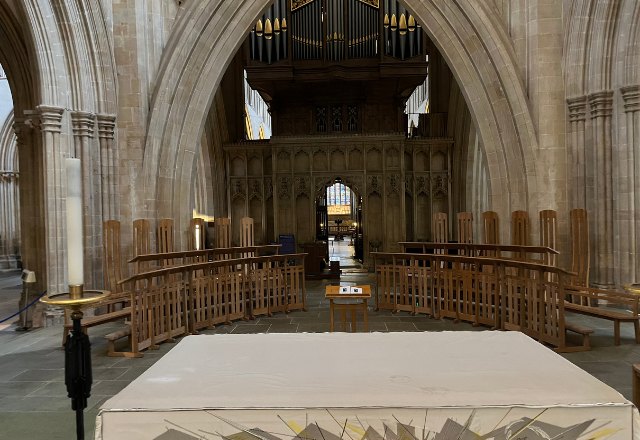
Having balanced the speakers carefully with each other, we set about choosing locations for each department. The console had been placed on the far side of the organ screen, due to space constraints in the Quire. To cater for this, we set up our voicing keyboard at approximately the location that the Director of Music would stand in when conducting the choir. It was difficult to hear the organ from its position on the far side of the screen, and voicing it from the console certainly would not produce a satisfactory result!

It was decided that the Swell would be placed in the middle arch, the Great, Tuba, and Pedal upperwork in the most distant arch, and the Choir nearest to the screen. The Choir on the original organ was unenclosed, and too loud for usefully accompanying the cathedral choir; the team were looking forward to having an enclosed division! We made sure to level the divisions carefully so as to make sure that the Choir and Swell were as valuable as possible to accompaniment – not too loud with boxes open, but not so distant as to be ineffectual. At various points the team kindly helped us compare our work with the current pipe organ, so we were extremely lucky to hear what we believe to be the final notes of the old pipe organ before its restoration began the following Monday!
From there it was a process of individually voicing each rank to be the most appropriate it could be in the building. We had a brief to make the sound typical of a cathedral organ from the 1900s/1910s, and were keen to make sure that we created the most faithful “English Cathedral” style instrument we could in the time.

Choral Evensong provides a nice break
There was also the wonderful privilege of being able to listen to a wonderful Choral Evensong: Moore Preces & Responses, Psalms 41-43 (one of my favourite sets), Bevan Magnificat & Nunc dimittis secundi toni, and Poulenc Videntes stellam. The choir sounded absolutely excellent, testament to the fine work of the team at Wells.
As soon as the choir packed away, we were able to show our progress to the organists. Timothy and Carolyn played through some of the stops we had made, and gave us wonderfully valuable feedback for the remainder, taking particular time to choose their favourite Clarinet. The current Grand Organ is bereft of a clarinet, having lost its 16’ Clarinet to become a 4’ Flauto Traverso in the previous 1973 rebuild. Happily, we understand that when the organ returns in a couple of years, it will gain a new one!

After Evensong, we continued voicing well into the night, as we knew time was tight and wanted to make the best possible use of our short time there. Having heard the choir just a couple of hours earlier, it was clear to us that the cathedral needed the best possible instrument! The building had generally been delightfully quiet during the day, but we could not predict whether there would be similar noise the next day; voicing needs as silent an environment as possible.
By the end of the evening we were satisfied with the Choir, Swell, and half of the Great.
Second day of Voicing the organ
The following morning was spent mainly on the choruses. We were careful to give our 4’ Principals the grandeur they deserved, with a powerful Fifteenth on top. The Twelfth and Mixture served simply to colour the chorus, rather than to add any more power. The Choir had two Tubas on the specification, so we chose to enclose one of them, for allowing quieter fanfares, solos, and generally increased control.
A single large subwoofer provided the foundation of the organ, and the cathedral was incredibly generous to it; we started the process wondering if the installation might need a second one, but the single unit was more than capable.

Balancing the organ in the nave
By lunchtime on the second day, we had finished the organ in the quire, and all that remained was to balance it in the nave.

This involved a curious process of lying on the floor tweaking settings on amplifiers, then rushing backwards and forwards from nave to tower crossing to listen to the effects! It must have looked very strange to onlookers… Originally the sound in the nave was massive – and the Tuba Mirabilis was akin to standing under the Royal Trumpets at St Paul’s Cathedral! Magnificent for a moment, but definitely not the refined sound we were after.
Finally, once we were satisfied with the sound in the nave, we did some final calibrations at the console to make the players’ lives easier. And as a treat, we left the organ with some actual bells and whistles… the instrument was equipped with orchestral tabs, so we left the organ with tubular bells, harp, and celesta. We hope they will provide an occasional moment of delight in the organ’s life there.

All in all, a satisfying couple of days in an extremely beautiful building, and a wonderfully uplifting start to our year!
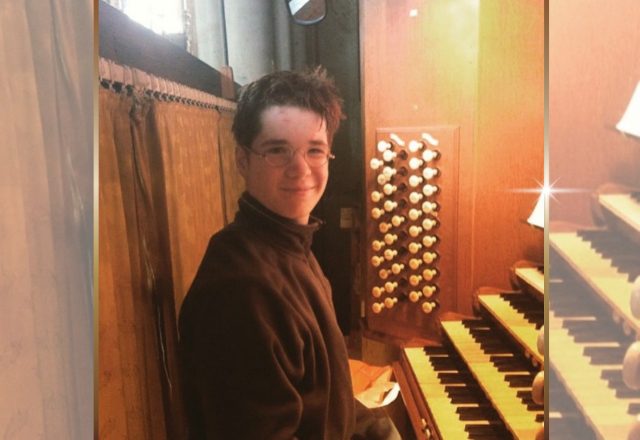
I have been fascinated by organs from a young age of 11, not only playing them but also their construction and history. I have played organs up and down the country and studied under some great musicians. I come to Viscount Classical Organs with expertise in installing and repairing organs with a specialism in organ electrics.


Leave a Reply