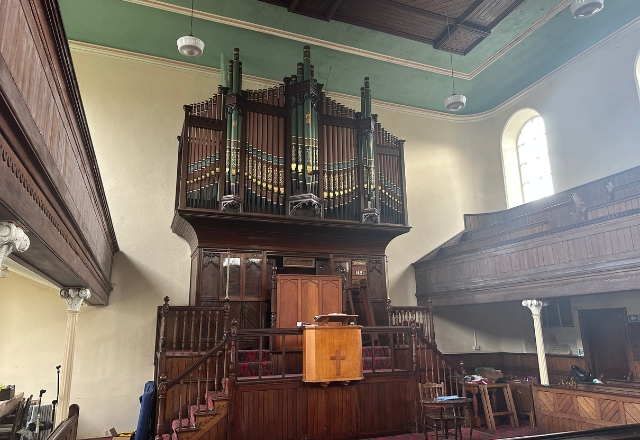
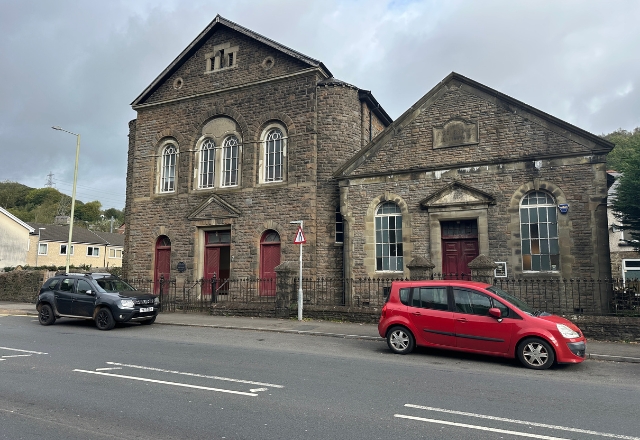
A little over a year ago I saw a social media request to help fund the purchase of this chapel and save it for community use. The main factor that caught my attention was the important historic link to one of the best-known hymn tunes ever written ‘Cwm Rhondda’, which I expand on below. The chapel built in 1885 is in Hopkinstown just a mile north of Pontypridd.
The words and the tune
As a Welshman, I often select the Welsh tune for a hymn when a number of alternative tunes will fit the words. ”Cwm Rhondda is nearly always matched to the words of Guide me, O thou Great Jehovah (or Guide me, O thou great Redeemer!).”
The original Welsh Text: Arglwydd arwain trwy’r anialwch was published by William Williams in 1762. An English Translation was made in 1771 by Peter Williams, and a revised version by William Williams himself (which is the one usually sung now) appeared in 1772. You can find this information in greater detail in the Hymnology Archive, a resource I did not know existed until preparing this blog. However, it was not until 1907 that the tune Cwm Rhondda was written by John Hughes. It was initially just called Rhondda but later changed to Cwm Rhondda when another tune of the name Rhondda was found to have been composed earlier.
Coincidently, these words are often accompanied by another Welsh tune Bryn Calfaria written by Willam Owen and later arranged by Vaughan Williams.
The tune has majestic style and the last two lines form an amazingly inspirational conclusion to the tune. It wonderfully underpins the words that engages a great crescendo to emphasise the text. The blend of tune and text is remarkable, but then it owes all that quality to Welsh talent.
John Hughes and the first performance
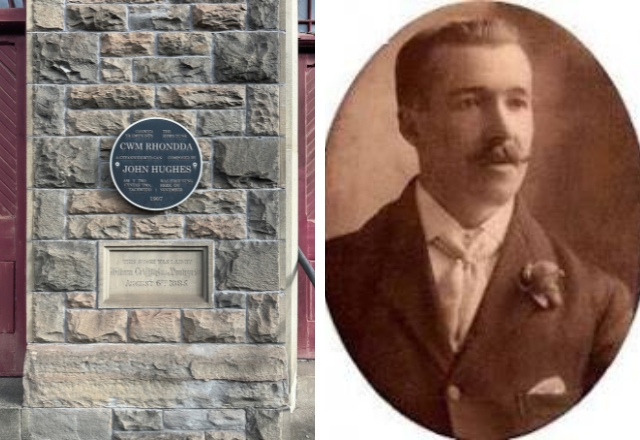
John Hughes, the composer, was born in Dowlais in 1873 and lived in Tonteg from 1874 until his death in 1932. He began life as a Colliery door boy. Later he became a clerk and then a traffic manager at the Great Western Colliery.
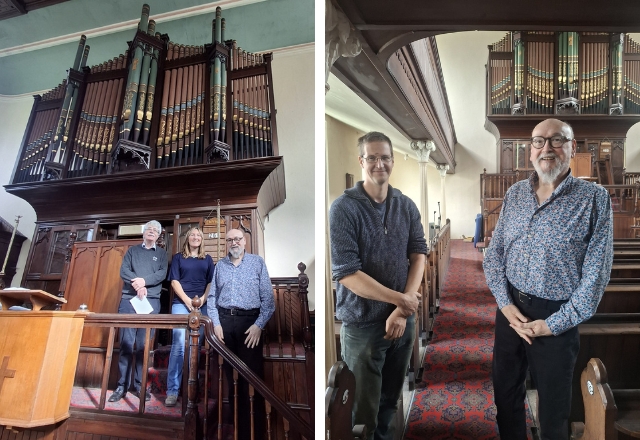
He composed the tune for a festival of praise at Capel Rhondda held in 1907 which may have been the final fund raising event for the new pipe organ that opened in January 1908. It was received with such enthusiasm it was sung over and over again at the multiple special services set up that weekend . That enjoyment continues to this very day. It was sung by the Welsh Regiment as it marched to face the enemy in World War One and is sung at almost all Welsh International Rugby Games. It has become a piece embroiled in worldwide enjoyment and performance. There can be no better reason, indeed necessity, to save and preserve the Chapel where it was first performed.
The organ that started it all
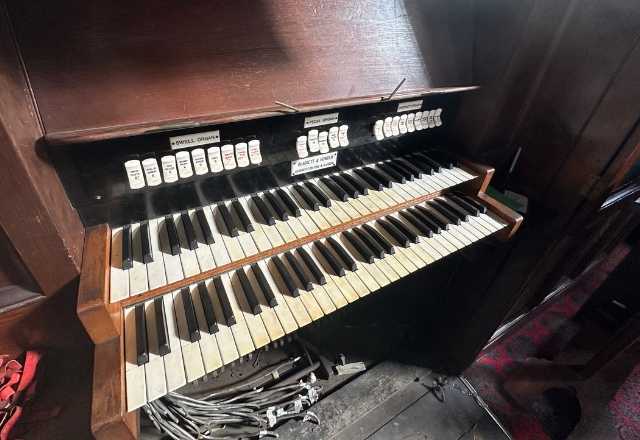
Clearly there is a very tangible link between the building with the instrument that was the trigger for the composition of the tune. Today the organ is silent but it is all there and totally unmolested, unlike many instruments over 100 years old, so this instrument also deserves careful restoration. Initial work cleaning the pipework, supported by the charity ‘Pipe Up for Pipe Organs‘ has been carried out by local organ builder and repairer Kingsley Robinson and Martin Renshaw, a stalwart with decades of work on historic instruments. But there is much left to do.
Wales’s second national anthem
Cwm Rhondda is often sung outside a religious context. It is widely known as Wales’s “second national anthem” (after Land of My Fathers). It is famously sung by crowds at Welsh rugby matches and national gatherings.
It features prominently at major British royal and public events, including the funerals of Princess Diana (1997) and the Queen Mother, as well as the weddings of Prince William and Prince Harry.
It resides in the top ten of hymns and tunes that are a testament to the quality of the words and the melody. It is a national treasure and the building in which it was first performed needs to be preserved to pay tribute to the talent that created it.
A family connection
My grandfather was an FRCO and organist in Pontypridd before moving to Aberystwyth. Born in the 1880s he may well have been present at the event in 1907 and have played this instrument over time. Sadly, I have no family members left to answer the question, so this is another reason why helping to preserve Capel Rhondda for the community has become an important task for me to assist.
In the unlikely event you are not familiar with Cwm Rhondda here is recording by The Treorchy Male Voice Choir and Morriston Orpheus Choir. I suspect it was recorded at the Brangwyn Hall in Swansea, the organ pipework on the picture is the clue!
How you can help
This chapel and important part of Welsh history has been rescued by Rhian Hopkins a local schoolteacher but the challenge of repairing the building and bringing it into regular community use remains large. You can read about the project at https://www.capelrhondda.cymru/, where you will also find a link to donate.
Here is a direct link to the crowdfunder page to donate if you share my thoughts on the importance of this building and instrument to our national musical history.
We plan to support the project over the coming months and will share regular updates on its progress. I would love to hear Cwm Rhondda played on that organ again, in the chapel where it was first sung. If the tune has ever lifted you at a rugby match, a wedding or a Sunday service, please consider giving whatever you can. Every donation brings that day closer.
A major target date for restoration of the chapel is November 20th 2027, the 120th anniversary of the service that gave the first performance of Cwm Rhondda. So exactly a year from the day we published this blog we will be hoping to have a huge event to celebrate the significant musical history the Capel Rhondda created.

I have had a passion for church organs since the tender age of 12. I own and run Viscount Organs with a close attention to the detail that musicians appreciate; and a clear understanding of the benefits of digital technology and keeping to the traditional and emotional elements of organ playing.


Leave a Reply